


German Business Visa
Citizens of the UK have a strong interest in traveling abroad. From our perspective, trips to Germany offer numerous benefits. British tourists visiting Germany not only enjoy sightseeing but also seek to immerse themselves in the country’s rich heritage and customs. However, international travel from the UK can present various challenges. Therefore, it is essential to provide clear guidance to British residents on how to obtain a German visa.
 A German flag
Table of Contents:
Introduction
1. Top Questions
1.1 What is a Visa & Who Needs One?
1.2 What is a Business Visa?
1.3 How Long is a Business Visa Valid for?
1.4 When Should I Apply for a Business Visa ?
1.5 How Long Does it Take to Obtain a German Business Visa?
1.6 Where is the Business Visa Processed?
1.7 How Much Does it Cost to Obtain a German Business Visa?
1.8 How to Pay?
2. Application Process
2.1 Documents Required to Apply for a German Business Visa
2.2 Steps to Apply for a German Business Visa
Introduction
It is clear that the tourism industry is thriving, and cross-border travel plays a crucial role in the socio-economic development of both the UK and Germany.
Firstly, international tourism contributes significantly to Germany’s prosperity and benefits local communities. To accommodate the growing number of British visitors, Germany has invested in infrastructure improvements, such as better roads, enhanced transport facilities, and stronger law enforcement. These developments not only assist tourists but also improve the quality of life for locals.
Secondly, the increasing influx of visitors creates more job opportunities, particularly in the hospitality sector. This boost in employment enhances the overall quality of life for Germans and generates additional revenue for the government, helping the nation address financial challenges.
However, there are growing concerns about the negative impacts of tourism on local communities and the environment in Germany. In response, both the government and individuals are implementing stricter visa procedures to mitigate these adverse effects and ensure that tourism continues to benefit Germany while preserving its prosperity.
1. Top Questions
1.1 What is a Visa & Who Needs One?
According to Wikipedia, a visa is a permit issued by Germany that allows an individual to enter, stay in, or transit through the country. This permit is stamped in the person’s passport by the embassy. The type of visa and the duration of stay are specified, and in some cases, an interview at the embassy may be required before obtaining the visa.
It is important to note that certain categories of UK residents may be eligible for visa-free entry to Germany.
British citizens are exempt from needing a visa for short stays in the Schengen area (up to 90 days within any 180-day period). However, if you plan to stay in Germany for more than 90 days, you will need to apply for a visa. Conversely, if you do not hold a UK passport but are a resident in the UK, you will need to obtain a German Schengen visa to visit Germany.
Please refer to the tables to determine whether your nationality requires you to apply for a German visa.
[expand title=”The countries whose citizens are required to get a German visa in order to enter there are”]
| A | |||||
| Afghanistan | Algeria | Angola | Armenia | Azerbaijan | |
| B | |||||
| Bahrain | Bangladesh | Belarus | Belize | ||
| Benin | Bhutan | Bolivia | Botswana | ||
| Burkina Faso | Burma/Myanmar | Burundi | |||
| C | |||||
| Cambodia | Cameroon | Cape Verde | Central African Republic | Chad | |
| China | Comoros | Congo | Cote D’ivoire | Cuba | |
| D | |||||
| Dem. Rep. Of Congo | Djibouti | Dominican Republic | |||
| E | |||||
| Ecuador | Egypt | Equatorial Guinea | Eritrea | Ethiopia | |
| F | |||||
| Fiji | |||||
| G | |||||
| Gabon | Gambia | Ghana | Guinea | Guinea-Bissau | Guyana |
| H | |||||
| Haiti | |||||
| I | |||||
| India | Indonesia | Iran | Iraq | ||
| J | |||||
| Jamaica | Jordan | ||||
| K | |||||
| Kazakhstan | Kenya | Kosovo | Kuwait | Kyrgyzstan | |
| L | |||||
| Laos | Lebanon | Lesotho | Liberia | Libya | |
| M | |||||
| Madagascar | Malawi | Maldives | Mali | ||
| Mauritania | Mongolia | Morocco | Mozambique | ||
| N | |||||
| Namibia | Nepal | Niger | Nigeria | Northern Mariana’s | North Korea |
| O | |||||
| Oman | |||||
| P | |||||
| Pakistan | Papua New Guinea | Palestinian Authority | Philippines | ||
| Q | |||||
| Qatar | |||||
| R | |||||
| Russia | Rwanda | ||||
| S | |||||
| Sao Tome And Principe | Saudi Arabia | Senegal | Sierra Leone | ||
| Somalia | South Africa | South Sudan | Sri Lanka | ||
| Sudan | Suriname | Swaziland | Syria | ||
| T | |||||
| Tajikistan | Tanzania | Thailand | Timor-Leste | ||
| Togo | Tonga | Tunisia | Turkey | ||
| Turkmenistan | |||||
| U | |||||
| Uganda | Uzbekistan | ||||
| V | |||||
| Vietnam | |||||
| Y | |||||
| Yemen | |||||
| Z | |||||
| Zambia | Zimbabwe |
[/expand]
With a UK residence permit that remains valid for at least three months beyond your planned departure date from Germany or the Schengen Area, you can benefit from the following:
- You are permitted to stay in Germany for up to 90 days. However, if you intend to stay in Germany for more than 90 days, you will need to apply for a residency permit rather than a German Schengen visa.
- If you hold a 3-month UK visa, you can extend it for an additional three months to become eligible to apply for a German Schengen visa from within the UK. It is important to apply for this extension before your current visa expires and while you are still in the UK.
1.2 What is a Business Visa?
A Business Visa is designed for traveling to Germany to attend or participate in trade fairs, seminars, or conferences related to your professional activities. This visa is applicable when you are responding to invitations or requests from business partners in Germany.
1.3 How Long is a Business Visa Valid for?
A Business Visa is valid for up to 90 days. To obtain this visa, you must demonstrate a clear connection between your professional activities and the purpose of your trip. This short-stay visa can be used for multiple entries into Germany, as specified on your visa sticker under “Number of Entries.”
You may enter Germany and stay for up to 90 days, or make two or three trips within the visa’s validity period. However, the exact duration and number of entries are determined by the German authorities and may vary based on your specific circumstances.
1.4 When Should I Apply for a Business Visa?
You can submit your Business Visa application up to 6 months before your trip to Germany.
The latest you can apply is 15 working days before your trip. However, we strongly recommend submitting your application at least 3 weeks before your travel date to allow the consulate or embassy sufficient time to process your visa.
1.5 How Long Does it Take to Obtain a Business Visa?
In most cases, the processing time for a Business visa is 2 weeks.
1.6 Where is the Business Visa Processed?
If you are visiting only Germany, you need to submit your application at the VFS Visa Center in the UK:
VFS Joint Visa Application Centre
Address: 66 Wilson Street
London
EC2A 2JX
Contact details:
Email: info.ituk@vfshelpline.com
Helpline number: 0871 376 0023
If you are visiting multiple countries including Germany, you should submit your application at the Visa Center in the country where you will spend the most days. If you plan to spend an equal amount of time in each country, apply at the Visa Center in the country you will enter first.
To meet the high demand for German visas, the German Embassy has outsourced its visa processing to German Visa Centers in London. These centers are third-party service providers authorized to accept visa applications on behalf of the country. They forward the applicant’s information to the responsible body for visa processing, which is the Visa Application Center or the embassy of the destination country.
Our company can assist you with completing and submitting the necessary documents to the Visa Application Center. Currently, we handle the preparation and submission of German visa applications through the VFS Visa Application Center.
 VFS Center’s official website page
1.7 How Much Does it Cost to Obtain a German Business Visa?
The cost for processing a visa varies depending on the category of UK residents:
- £73 for adults
- £36.50 for children aged 6-12 years
There is no fee for the following categories:
- Children under 6 years of age
- Family members of an EU/EEA national: You must provide the following documents:
- Original Marriage Certificate or Civil Partnership Certificate
- Original Full Birth Certificate
- EU/EEA National’s Passport
- Students traveling to Germany for a short-term study accompanied by teaching staff: You must provide a letter from the school principal or dean indicating that the trip is a necessary part of the school or college program.
1.8 How to Pay?
You can pay the visa fees by cash or credit/debit card when applying at the Visa Application Centre. Please note that checks are not accepted.
2. Application process
2.1 Documents Required to Apply for a German Business Visa
When applying for a German Business Visa, you must provide the next documents:
1. Visa Application Form
You need to complete the Short-stay Visa Application Form legibly and correctly. Ensure you sign the form and include accurate addresses in Finland, specifying the number, street name, city, and postal code.
Please refer to the following table to fill in the form correctly:
| The appropriate Form Section | Our explanation of each Form Section |
| Surname | Fill in your name like it is on your passport (do not write “married name” and your husband name) |
| Surname at birth | Write the name you had at your birth if different than your current surname |
| First Name (s) | Write your first name like it is on your passport |
| Date of birth | Fill in your date of birth like this: day/month/year |
| Place of birth | Fill in your place of birth like it is on your passport |
| Country of birth | Fill in your country of birth even there is no it on your passport |
| Current Nationality | Fill in your nationality like it is on your passport |
| Nationality at birth, if different | Fill in your nationality at birth if it is different from the nationality on your passport |
| Other nationalities | |
| Sex | Fill in your male or female gender |
| Marital Status | For a common-law marriage, indicate “common-law marriage” in the section “Other”. For a PACS (your destination country civil union contract) with a local citizen, indicate “PACS” in the section “Other“ |
| Parental Authority | Fill in the full name, address, telephone number, email address, and nationality of the person who keeps parental authority or legal guardianship |
| National Identity Number | Fill in your national identity number if you have this one |
| Type of travel document | Write the appropriate kind of your travel document |
| Number of travel document | Write the appropriate numbers of your travel document |
| Date of issue | Write the date your passport was issued (not the extension date) |
| Valid until | Write your passport expiration date taking into account the extensions |
| Issued by | Write the country of issuing your passport and the authority that issued the passport |
| Personal data of the family member who is a European Union, EEA or Swiss Confederation citizen or is a United | Fill in the full name, date of birth, nationality, passport number, and relationship only if you are the dependent spouse, child, father, or mother of a person who is a citizen of another State of the European Union. |
| Kingdom citizen beneficiary of the withdrawal agreement, if applicable | |
| Family relationship with an European Union, EEA or Swiss Confederation citizen, or with United Kingdom citizen beneficiary of the withdrawal agreement, if applicable | Fill in the corresponding status |
| Applicant's home address and e-mail address | Write the e-mail address: 1) your own one, either 2) another person one, or 3) company (accordingly, write the name of the mailbox owner). |
| Telephone number | Write your cellular number in your residence country and, where appropriate, in the country where you are submitting your visa application |
| Residence in a country other than the country of current nationality | If you are living in other country you need to write the number of your residence permit and its expiration date |
| Current occupation | Fill in the current occupation like it is on the passport, for example: “professor” or “retired (former designer)”. If you have no occupation, write “no occupation” |
| Employer and employer's address and telephone number | Fill in the name of the organization (firm, public service, educational institution) where you work or study and its name, address, and telephone number |
| For students, name and address of educational establishment | |
| Purpose(s) of the journey | Write the appropriate goal of your travel |
| Member State of main destination (and other Member States of destination, if applicable | Write a country name as your primary destination. If it is a foreign overseas department or territory, write your destination country name and the name of the department or territory |
| Member State of first entry | Fill in your destination country |
| Number of entries requested | Write your desired number of entries with the dates of arrival and departure |
| Fingerprints collected previously for the purpose of applying for a Schengen visa | If your fingerprints have already been taken for a visa application, write the date |
| Entry permit for the final country of destination, where applicable | Write the number and validity dates for your visa at your final destination, if this country is outside the Schengen area |
| Surname and first name of the inviting person(s) in the Member State(s). Address and e-mail address of inviting person(s). Telephone number | Write the name of the person who invited you, address, e-mail and a phone number |
| Name and address of inviting company / organization, phone number and e-mail number | Write the contact info of the organization that invited you and the contact info for your contact person in the organization |
| Cost of travelling and living during the applicant's stay is covered | Indicate the necessary boxes |
| Place and date | Write the place and date where you are filling in the form, even if this date is different than the day you are going to the visa service |
| Signature | The visa applicant must sign and not another person. If the visa applicant is a minor (under 18), the application must be signed by a person having parental authority and their relationship should be included in parentheses (father, mother, guardian). If the visa applicant cannot sign, a cross may be used |
2. Two Recent Photographs
Follow these Austrian Visa Photo Requirements:
- Two identical photos taken within the last six months.
- Photo size: 35×45 mm (width x height).
- Colour photos only (no black and white).
- Head should occupy 70-80% of the photo.
- Background should be bright and lightly coloured (light grey is recommended).
- The applicant should be facing the camera directly.
- Maintain a neutral expression (no smile and mouth closed).
- Avoid uniforms or colours that match the background.
3. Valid Passport
Your passport’s maximum validity period: 10 years.
Your passport’s minimum validity period: 3 months after your trip to Finland. Your passport should have at least two blank pages in order to be able to affix the visa sticker.
4. Roundtrip Reservation
This document should include the dates and flight numbers for your entry and exit from the Schengen Area.
5. Travel Health Insurance
You need to be aware of some travel insurance requirements, such as the following:
- A minimum coverage of at least 30,000 EUR;
- It should cover all member states of the Schengen Area;
- Cover any expenses on repatriation for medical reasons, urgent health attention, and/or emergency hospital treatment or death.
Regarding this, it is highly recommended to contact one of the companies such as AXA, Europ Assistance, or DR-WALTER.
 AXA insurance company page
6. Proof of Accommodation
To prove your accommodation arrangements in Germany while conducting business, you can choose from the following options:
- Hotel Booking: Confirmation of a reservation at a hotel in Germany.
- Letter of Invitation: A letter from a host confirming your stay at their residence in Germany.
- Rental Contract: A contract for renting a property in Germany.
 A hotel in Germany
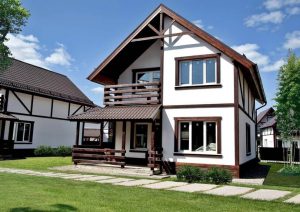 A house in Germany to stay
11. Proof of Subsistent Financial Means
This document is essential to demonstrate that you have sufficient funds to cover your expenses during your stay in Germany. Proof of subsistent financial means may include:
- Bank Account Statement: A statement showing your financial transactions for the last three months.
- Verbal Note from the Ministry of Health: If the Ministry of Health in your home country will cover the costs of your medical treatment, include a letter confirming the government’s commitment to cover your medical expenses.
Other acceptable documents for proof of subsistent financial means include:
- Personal bank statement for the past three months
- Credit card
- Cash
- Cheques
- Payslips
- Proof of employment
- Document from your sponsor covering your stay
- Proof of prepaid accommodation
- Document confirming private accommodation
- Proof of prepaid transport
- Other relevant documents
When applying for a German visa, you should demonstrate that you have access to at least 45€ per day for the duration of your stay in Germany.
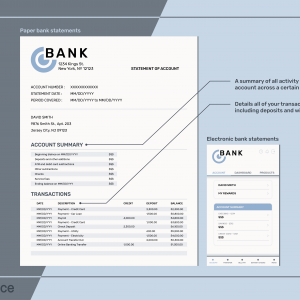 Bank account statement
8. Evidence of Employment Status
If you are employed:
- Employment contract.
- Leave permission from your employer.
- Current bank statement for the last 6 months.
- Income tax return or a certificate of income tax deducted at source.
If you are self-employed:
- A copy of your business license.
- Company bank statement for the last 6 months.
- Your Income Tax Return.
9. Proof of Financial Means from One or Both Parties
You need to provide evidence in the employer’s letter or the partner company’s invitation that one or both parties are willing to cover your travel expenses (45 euros per day) while you are in Germany.
10. Letter from Your Employer
This letter should outline your travel purpose and confirm the duration of your stay in Germany.
11. Invitation Letter from Your Partner Company in Germany
This letter should be issued by your German partner and faxed to the consulate. It should detail your participation in meetings or trade events relevant to your field of expertise.
12. Your Cover Letter
This letter should explain the purpose of your trip to Germany.
13. A Short Profile of Your Workplace
Include a brief profile of your workplace, detailing relevant information about your organization.
2.2 Steps to Apply for a German Business Visa
Regardless of your visa type, the process for applying is as follows:
First Step: Locate the nearest Visa Application Centre where you need to submit your documents. Contact us for assistance in finding the appropriate centre
 Your choice of applying
Second Step: Determine the best time to visit the Visa Application Centre in person to submit your Austrian Visa application.
 Your choice of time to come to us
Third Step: Schedule an appointment at the Austrian Visa Application Centre.
You can make an appointment in one of two ways:
- Online
- In Person
 Make an appointment at the German Visa Application Center
Fourth Step: Attend your appointment at the Visa Application Centre with all the required documents.
 Your interview
Fifth Step: Pay the visa fee.
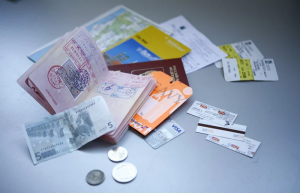 Paying money for your visa
Sixth Step: Wait for a response from the application centre regarding your visa application.
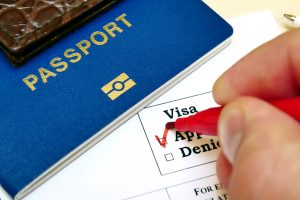 A reply from the VFS application center
Note: Ensure that your visa application form clearly specifies the dates of your visit and the cities you will be staying in. It is advisable to gather all necessary documents and complete the application form only after you have all the required information.